
Root cause analysis in hours, with AI
Customer story Maintenance Process Optimization Biomass energy
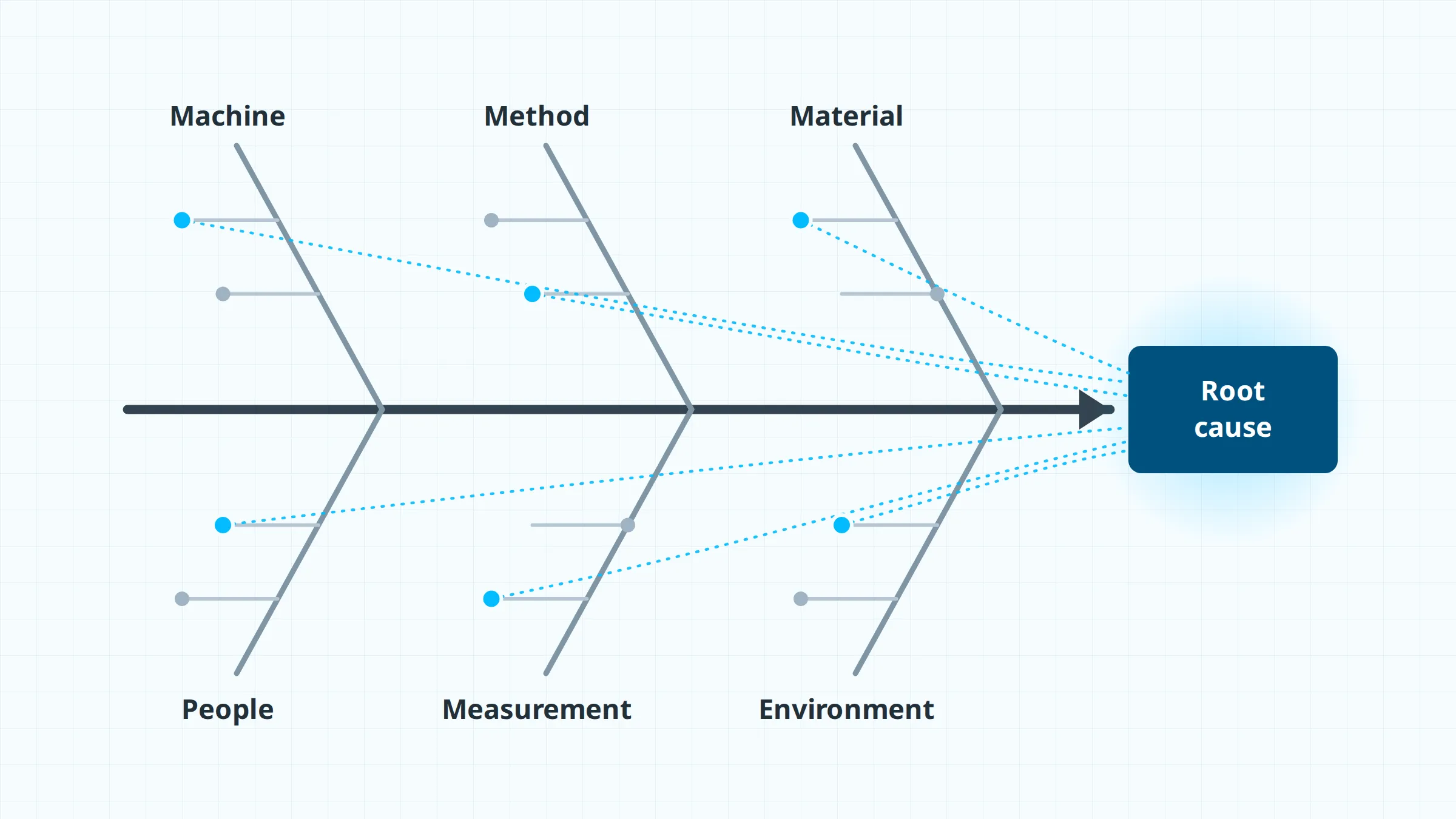
A plant runs a root cause analysis whenever performance falls short: a machine that keeps failing, a yield that stays flat, an OEE (overall equipment effectiveness) that stays low. In most plants, that analysis is slow and often stops short of the real cause.
Why root cause analyses fall short
- They take long. Gathering the records, talking to each shift and agreeing on a cause takes days or weeks, so most problems are never analyzed at all.
- The records are incomplete. A work order closes with a tick and no measurement, and the readings that would explain a failure sit in another system.
- Management decisions go unnamed. People write the report, and they rarely name the decisions made above them, so the analysis stops at the operator or the part.
- Nobody holds the whole picture. Connecting the dots takes the machine’s history, the process data, the procedures and the lessons of past failures, and one person rarely knows all of them.
How Koidra’s AI finds the cause
Koidra’s AI reasons over the plant’s knowledge graph: its assets and how they connect, every metric over time, the work orders and procedures, and the lessons of past analyses. Physics models of energy, heat and mass keep its explanations to what the plant can physically do.
It writes the first report with the evidence for every cause, and an action plan in which every action has an owner. Many actions are changes it makes in Koidra right away, such as a new metric, a better alarm, an updated procedure or a work order.
At Ayo Biomass
Ayo Biomass makes wood pellets in Vietnam, about 400,000 tonnes a year from its own two plants. Its root cause analyses now come from Koidra’s AI. The team gives feedback on the first report, and a validated action plan is ready within hours, where it used to take days or weeks. The reports are also more precise than before.
A sample report
Three rollers failed on one pellet mill in 18 days. The AI traced them to worn roller shells, missing grease and heavy load, and found a warning in the data one to two hours before each burnout. The report is shown with Ayo Biomass’s permission, with confidential information anonymized.
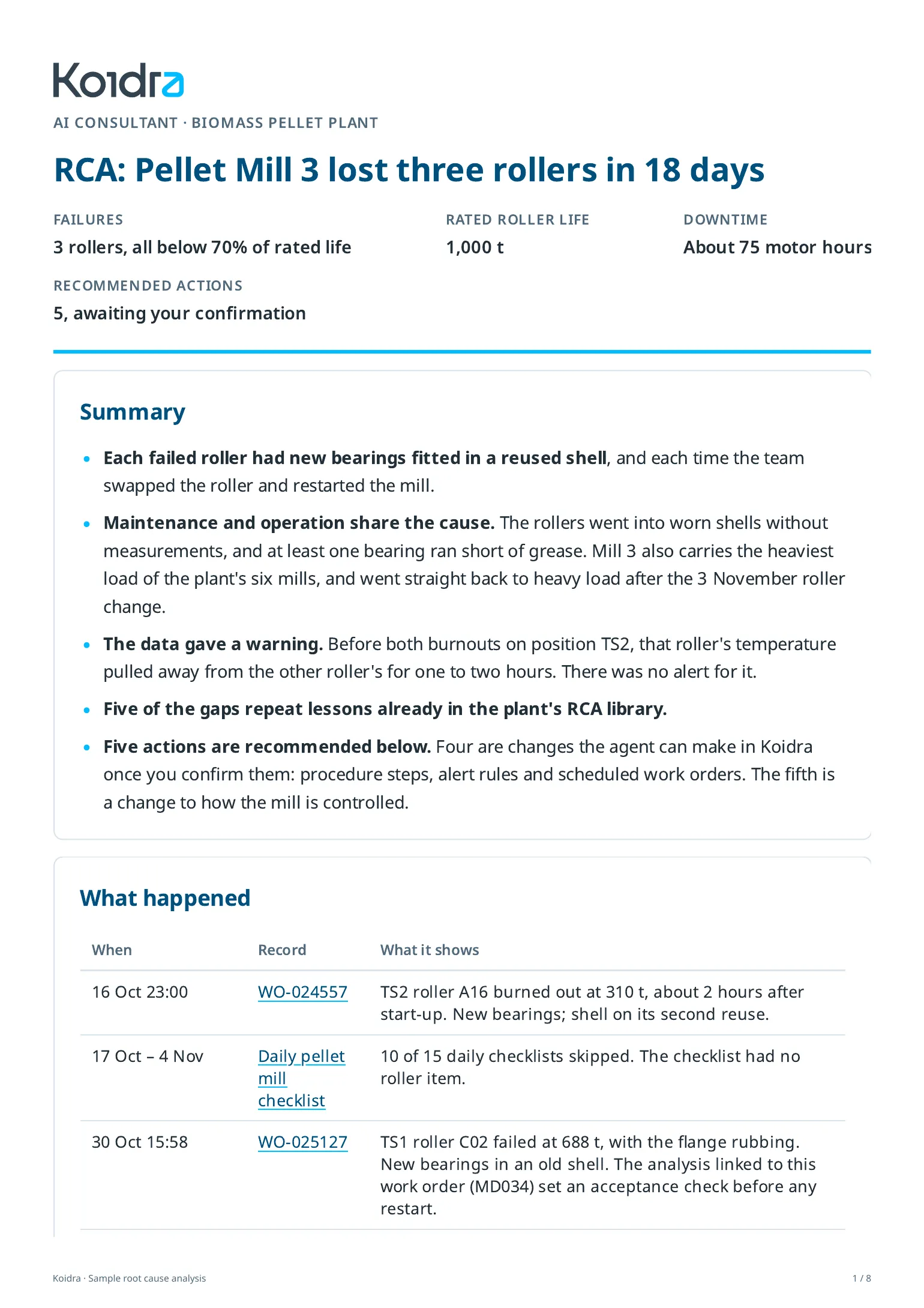
Read the full report (PDF, 8 pages)
Root cause analysis is part of the AI Consultant in Process Optimization Pro.