
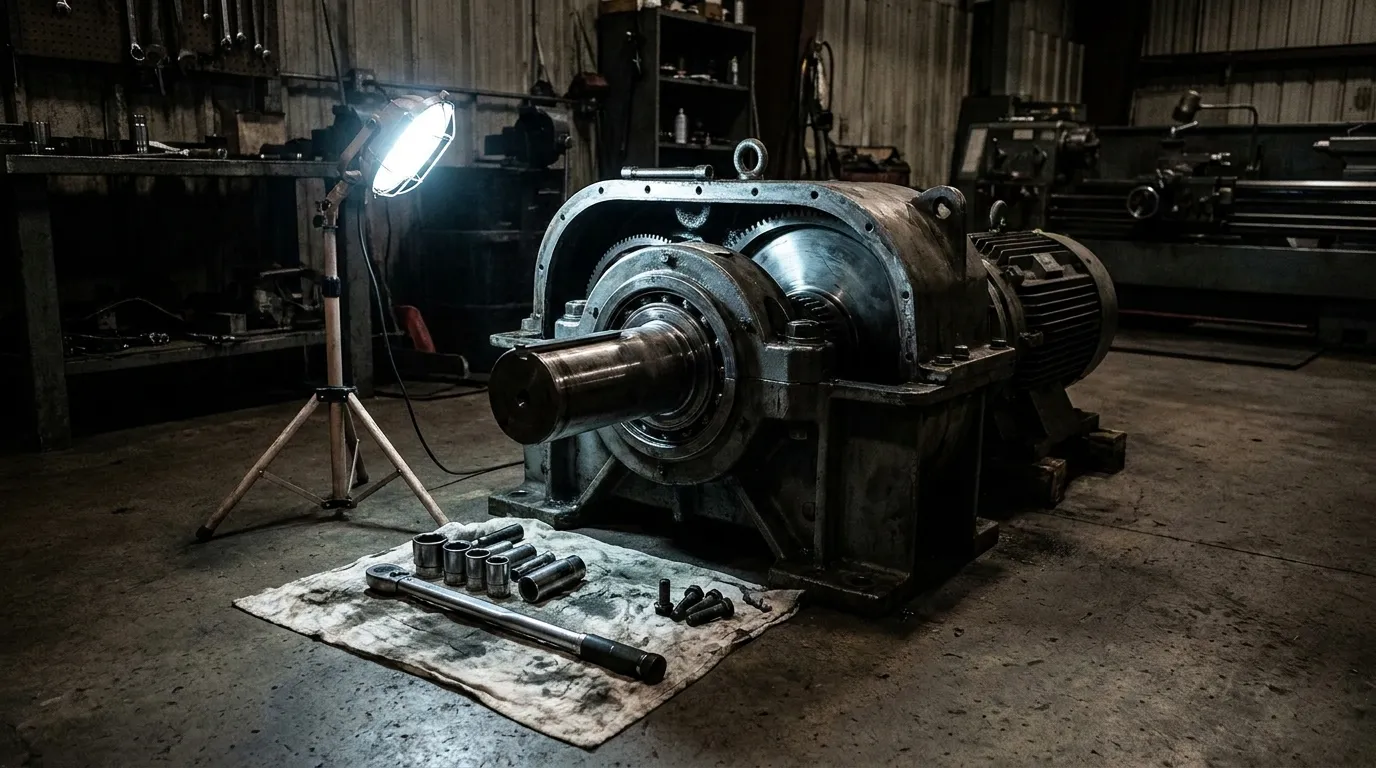
Start here
Maintenance Management
Work orders, preventive maintenance, asset records and spare parts, on the phone your technicians already carry.
Fix faults before they become breakdowns. When preventive work gets done, the line stops less.
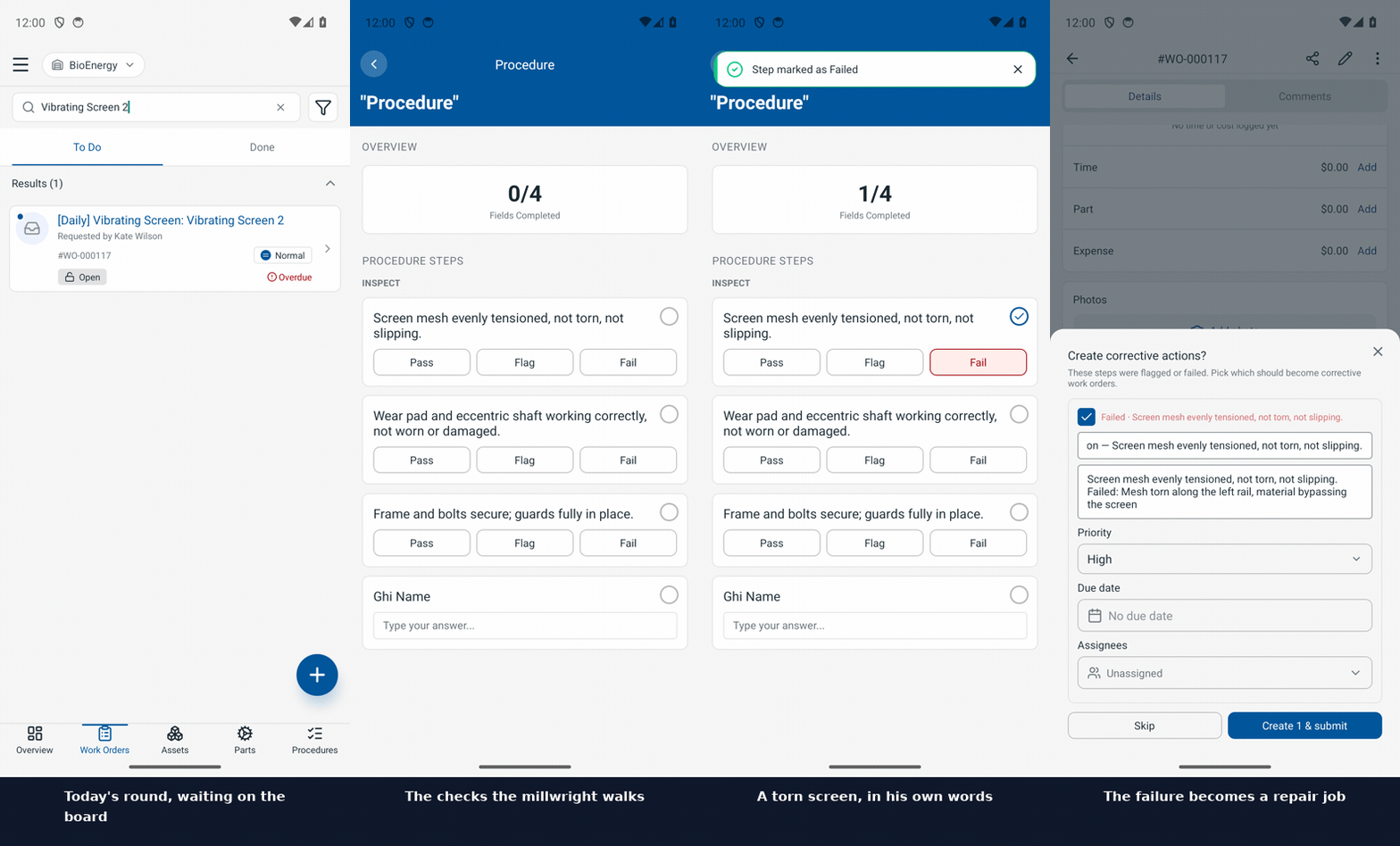
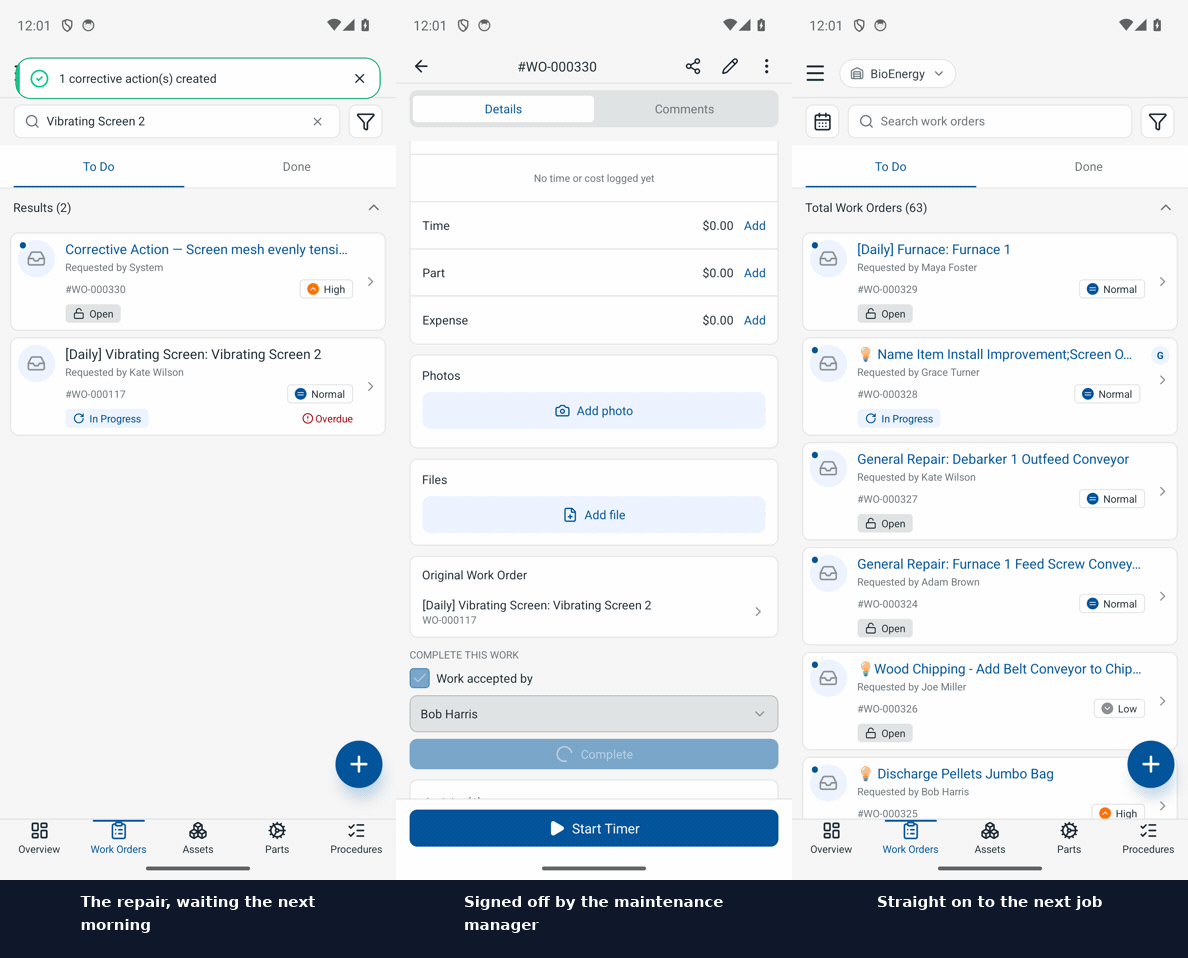
How it works
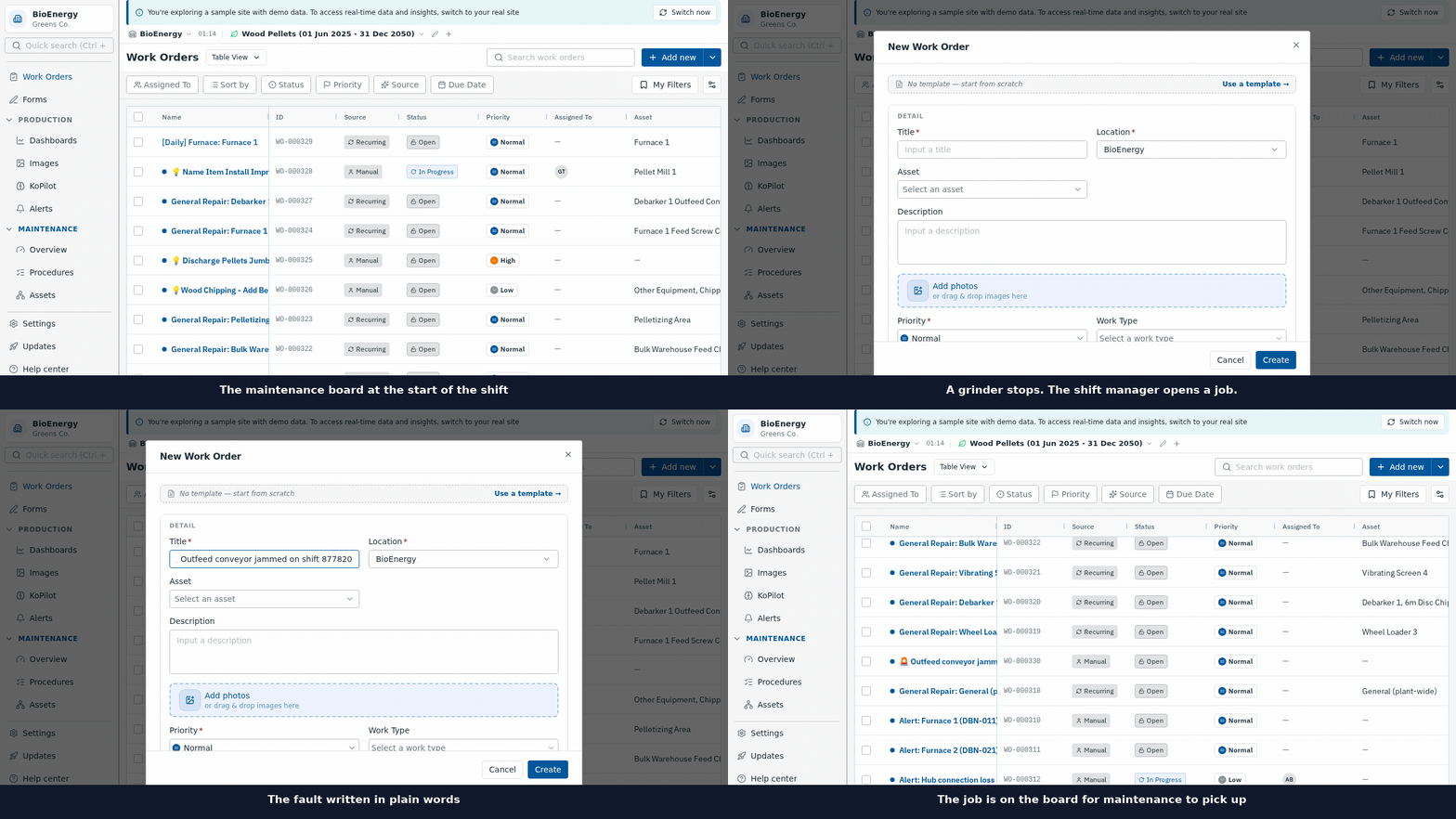
What it takes over from
- A whiteboard and somebody's memory
- A spreadsheet that only one person updates
- Paper job cards that never reach a cost
- Preventive work remembered rather than scheduled
Pays for itself by
Displacing a maintenance-software subscription outright, and turning preventive maintenance from a memory into a schedule with parts and costs attached.
The number a buyer checks: Preventive maintenance completion rate, the license it replaces, and parts carrying cost.
What Maintenance Management includes
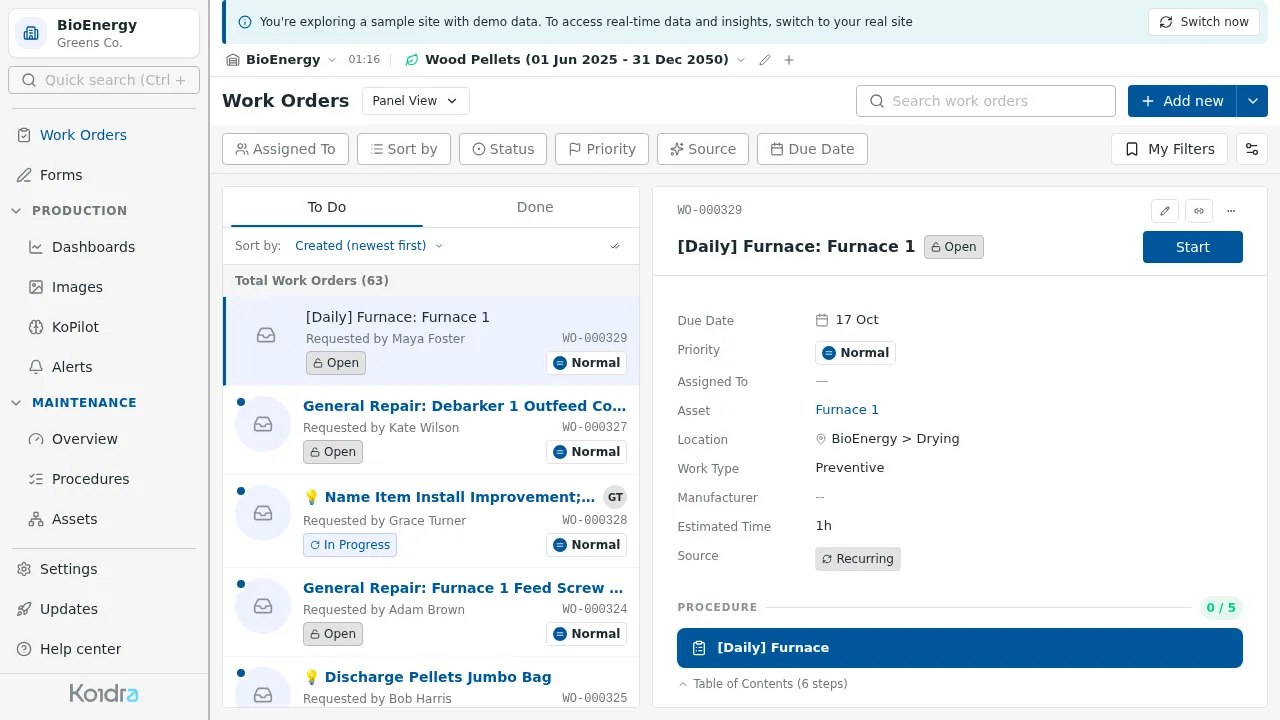
One place for your team to plan, assign, complete and track maintenance work.
- Work orders
- With priority, assignment, checklists, and photo evidence when work is completed.
- Preventive maintenance schedules
- So inspections and servicing happen when they are due, not when someone remembers.
- Asset records
- With maintenance and condition history attached to each machine.
- Spare-parts inventory
- Updated when parts are used on a work order, so stock levels reflect what is actually on hand.
- Conditional procedures
- That adapt based on what the technician finds during an inspection or repair.
- Maintenance cost tracking
- For labor and parts, summarized by job, asset and time period.
Add DataPilot and Predix, and you get predictive maintenance
Predictive maintenance on Koidra means the warning comes while the fix is still a planned job. Predix reads the sensor trends DataPilot collects beside the maintenance record Maintenance Management keeps, sees a fault developing, and opens the job for the right asset, with the checklist attached and the right person assigned, before anyone has noticed it.
Maintenance Management works on its own. Nothing has to be connected first, and you can set it up yourself. Add DataPilot, and Predix becomes available. Predix uses data from Maintenance Management and DataPilot, so the three are sold together.
The work order, machine history, sensor data, operator observations and maintenance costs all become unified operational data, so you can start with Maintenance Management today and add DataPilot and Predix later without moving anything into another platform.
Where this sits
You can start with Maintenance Management or with DataPilot. Predix needs both.
-
Start here
Maintenance Management
Work orders, preventive maintenance, asset records and spare parts, on the phone your technicians already carry.
-
Start here
DataPilot
Every signal the plant produces, in one place, live and historical.
-
AI insights
Predix
Reports that say what changed and what to do next, and early warning of a failing machine.
-
Autonomous control
KoPilot
Closed-loop control of the process, minute by minute, with no human at the panel.
Add DataPilot and Predix becomes available. It needs both, and it comes with both.
See Koidra on your own plant data
Bring a week of readings from one line. We will show you what the platform sees, what it would have flagged, and what it would have scheduled.
Book a demo